


WELLCAMP Extreme Cold Climate Solutions: A Comprehensive Guide to Insulation and Modular Camp Engineering

1. Why Extreme Cold Climate Modular Camps Require Specialized Engineering
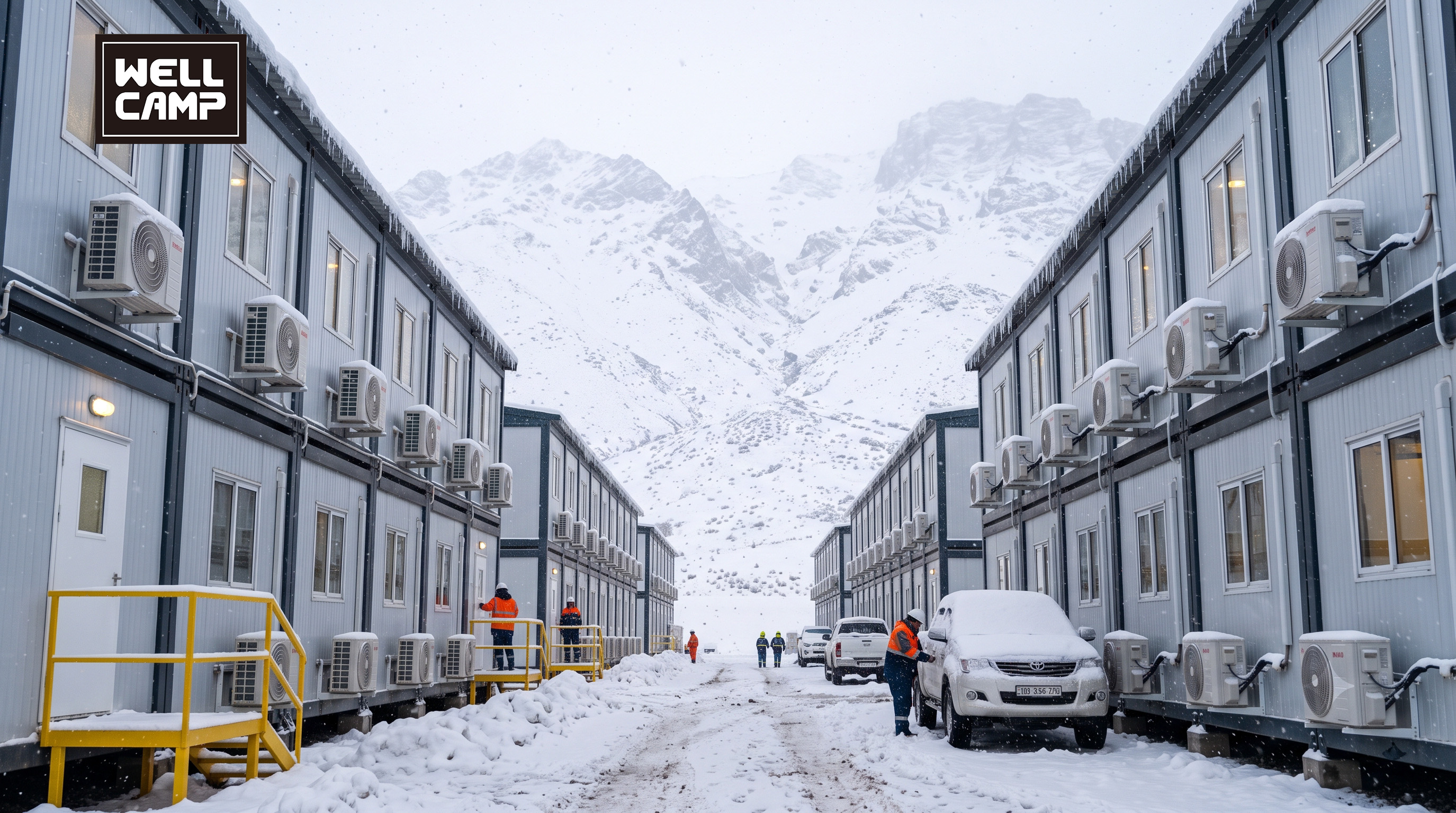
Mining, Oil & Gas, and infrastructure projects in extreme cold regions face challenges that go far beyond low outdoor temperatures.
In Canada, Central Asia, Russia, and high-altitude regions, modular buildings may be exposed to prolonged freezing conditions, heavy snowfall, strong winds, large temperature differences, and remote-site logistics.
For workforce accommodation, these environmental conditions directly affect:
- Indoor thermal comfort
- Heating energy consumption
- Water supply and drainage reliability
- Building envelope durability
- Structural safety under snow and wind loads
- Camp operation and maintenance costs
A modular camp designed for a temperate climate may not be suitable for a severe winter environment without technical upgrades.
WELLCAMP’s approach is to customize the building system according to the project’s design temperature, location, building function, and engineering requirements.
Extreme cold performance is not determined by insulation thickness alone. It depends on the coordinated design of the entire building system.
2. WELLCAMP Recommended Rock Wool Insulation Specifications by Temperature
WELLCAMP recommends selecting insulation specifications based on the project's minimum design temperature and environmental conditions.
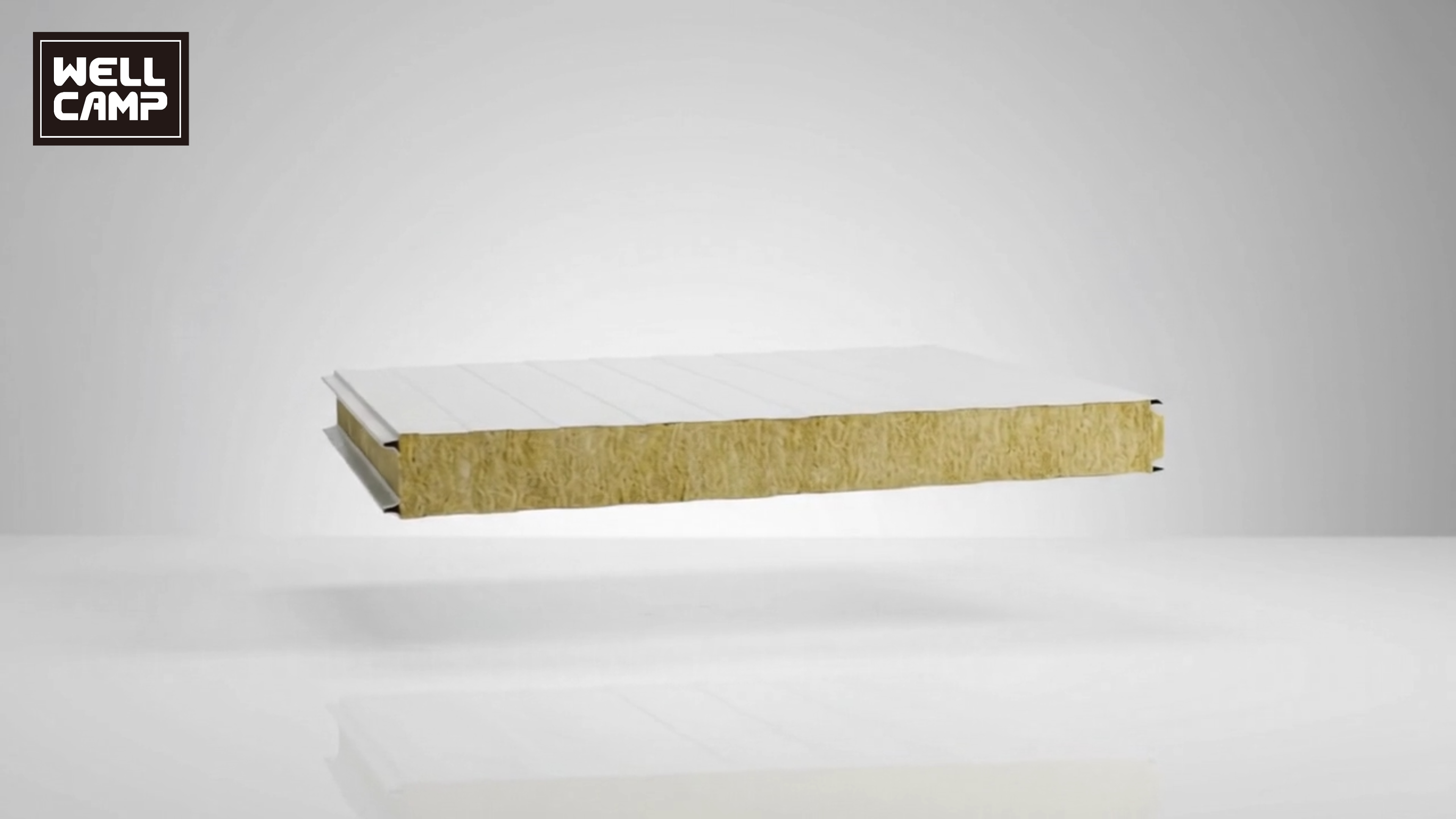
Rock wool is widely used in WELLCAMP's mining camp, oil & gas camp, workforce accommodation, and other modular camp applications.
The following specifications are WELLCAMP's preliminary recommendations for project discussions. Final configurations should be confirmed through engineering calculations and applicable local codes.
Recommended Insulation Reference
| Outdoor Design Temperature | Recommended Rock Wool Thickness | Recommended Density | Engineering Consideration |
|---|---|---|---|
| –5°C to –20°C | 100 mm | 100 kg/m³ | Standard cold-climate insulation upgrade |
| –20°C to –40°C | 100–150 mm | 100–120 kg/m³ | Enhanced thermal envelope |
| –40°C and below | Customized | Customized | Project-specific engineering design |
Note: The temperature bands are preliminary references. The –20°C boundary overlaps in the original recommendation ranges; the applicable configuration should be determined by project-specific design conditions.
Why Does WELLCAMP Recommend Rock Wool?
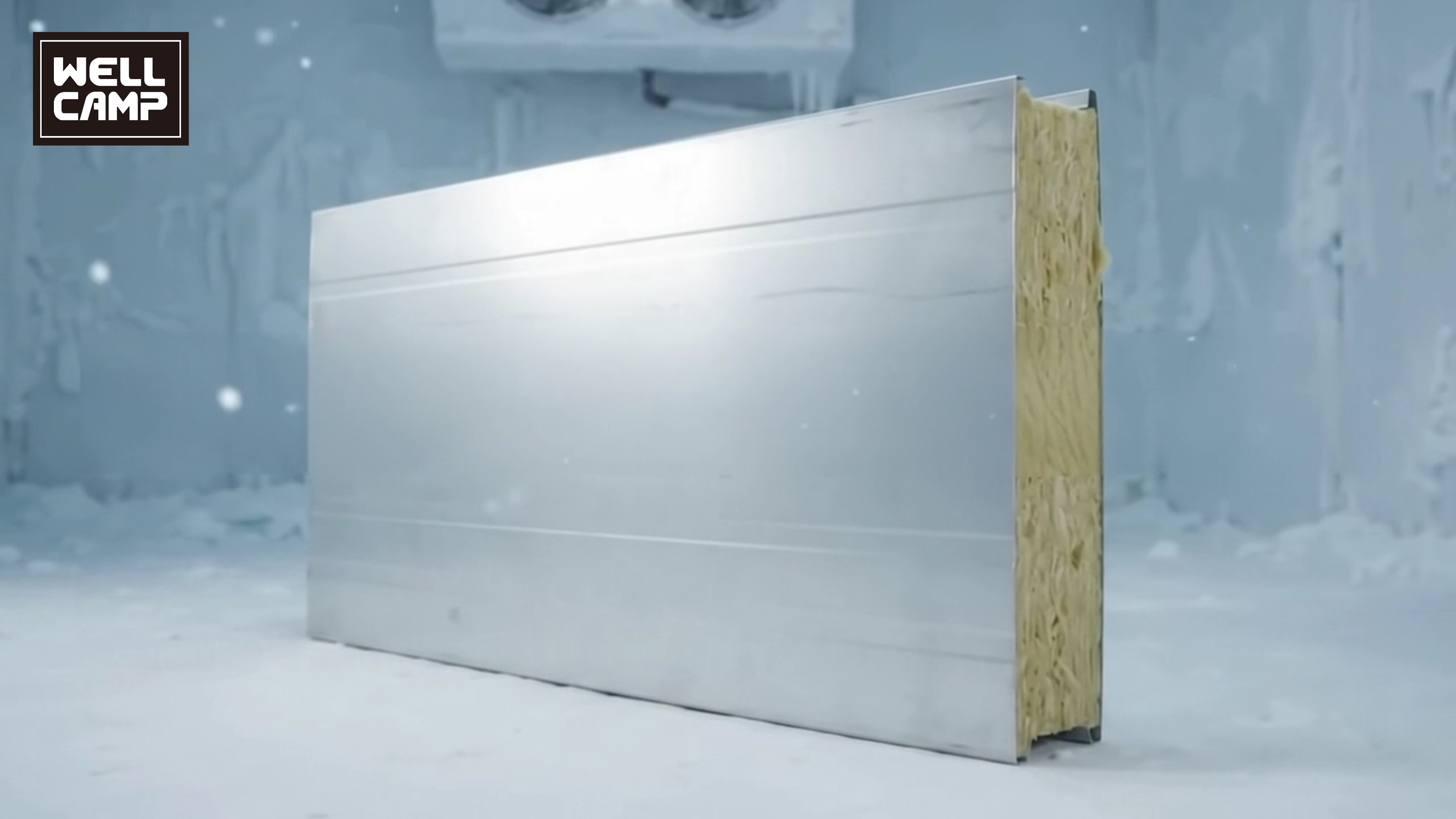
Rock wool is a mineral-fiber insulation material with several advantages for modular buildings in industrial environments.
1. Fire Resistance
Rock wool is non-combustible under applicable product classifications and is often selected for projects with demanding fire-safety requirements.
For mining and oil and gas camps, fire protection is an important consideration in accommodation buildings, offices, dining facilities, and utility areas.
2. Thermal Insulation
Rock wool helps reduce heat transfer through the building envelope. The insulation thickness, thermal conductivity, panel construction, and installation details all contribute to the overall thermal performance.
3. Dimensional Stability
Rock wool is commonly used in building envelope systems because of its dimensional stability. However, its performance in a modular building depends on proper moisture protection, panel installation, and structural detailing.
4. Suitable for Industrial Camp Applications
Based on WELLCAMP's stated project experience and customer feedback over approximately 20 years, rock wool has been widely used across mining camps, oil and gas camps, and various workforce accommodation projects.
Why Increasing Rock Wool Density Above 100 kg/m³ May Not Improve Insulation
A common misconception is that higher insulation density automatically means better thermal insulation.
In reality, thermal conductivity is the key parameter used to evaluate insulation performance.
Increasing rock wool density above 100 kg/m³ does not necessarily provide additional thermal insulation benefits. The actual result depends on the specific product's thermal conductivity, thickness, and system configuration.
For this reason, WELLCAMP focuses on selecting the appropriate insulation thickness and verified material performance rather than increasing density without a clear engineering reason.
3. Roof Insulation: Why One Insulation Layer May Not Be Enough
In extreme cold climates, the roof is one of the most important parts of the building envelope.
Heat naturally moves from warmer indoor spaces toward colder outdoor environments. If the roof insulation is insufficient, heat loss can increase heating demand and reduce indoor comfort.
For WELLCAMP cold-climate modular buildings, roof insulation can be enhanced in two ways.
Method 1: Increase the Rock Wool Insulation Thickness
The primary roof insulation layer can be upgraded according to the project's design temperature.
The selection should consider:
- Required thermal resistance
- Roof structure and available installation space
- Moisture and condensation control
- Snow load
- Roof panel weight
- Local building requirements
Method 2: Add an Additional Roof Frame with Sandwich Panels
For projects requiring enhanced insulation, WELLCAMP recommends considering an additional roof frame with an extra sandwich panel roofing system.
This configuration creates an additional layer of protection against cold outdoor conditions.
Potential benefits include:
- Additional thermal resistance
- Improved separation between the indoor environment and outdoor weather
- Better protection of the primary roof system
- Opportunities to improve condensation management
- Greater flexibility in adapting roof construction to project requirements
The additional roof system must be properly designed for structural loading, wind uplift, snow accumulation, drainage, and maintenance access.
Important: An additional roof frame is not simply a second roof placed on top of the first. It must be engineered as part of the complete roofing system.
4. Floor Insulation and Electric Heating: Protecting the Building from Ground-Level Heat Loss
Floor insulation is equally important in cold regions.
In modular buildings, the floor may be exposed to cold ground, an unheated crawl space, or outdoor air beneath an elevated structure.
Without sufficient insulation, the floor can become a significant heat-loss path.
WELLCAMP recommends strengthening the floor insulation system and integrating electric heating where required.
Floor Insulation Upgrade
The floor system may include:
- Enhanced rock wool insulation
- Insulated floor panels
- Steel floor structure with thermal protection
- Moisture and vapor control layers
- Proper sealing around floor joints
The insulation configuration should be determined according to the building's floor structure and site conditions.
Electric Heating System
For extreme cold projects, WELLCAMP recommends considering electric heating to improve indoor comfort.
Depending on the building function and project design, heating options may include electric floor heating, electric heaters, or other compatible systems.
The heating system should be sized according to:
- Outdoor design temperature
- Building envelope heat loss
- Indoor temperature requirements
- Building occupancy
- Power supply capacity
- Heating system redundancy requirements
Insulation reduces heat loss, while heating provides the energy required to maintain the indoor temperature.
These two systems should be designed together.
5. Rock Wool vs. PUR and PIR: Material Selection for Cold-Climate Camps
Customers often ask whether PUR (polyurethane) or PIR (polyisocyanurate) insulation should be used instead of rock wool.
These materials have different characteristics, and selection should be based on the project’s fire safety requirements, thermal performance targets, operating environment, and applicable standards.
Rock Wool
Rock wool is commonly selected for WELLCAMP's industrial camp applications because of its non-combustible nature and established use in modular building systems.
It is especially relevant where fire safety is a major consideration, including:
- Mining camps
- Oil & gas camps
- Industrial workforce accommodation
- Construction camps
- Remote project facilities
PUR and PIR
PUR and PIR insulation systems can provide relatively low thermal conductivity, which may allow high thermal resistance with less insulation thickness.
However, their fire performance depends on the specific formulation and tested assembly. They should not be treated as equivalent to non-combustible rock wool.
Low-temperature performance also depends on the material formulation, panel system, joints, and installation details. A blanket claim that all PUR or PIR products become brittle at low temperatures would be inaccurate.
WELLCAMP's Material Selection Perspective
Based on WELLCAMP's stated engineering experience and customer feedback over approximately 20 years, rock wool has been widely adopted in mining camps, oil and gas camps, and various types of industrial camps.
For projects with demanding fire-safety requirements, rock wool is a preferred material option.
Nevertheless, final material selection should be supported by technical data sheets, fire classification documents, thermal conductivity data, and project-specific requirements.
6. Doors and Windows: Controlling Heat Loss at Building Openings
Even when walls, roofs, and floors are well insulated, doors and windows can become weak points in the thermal envelope.
In extreme cold environments, insufficiently insulated openings may result in:
- Heat loss
- Cold drafts
- Condensation on glass and frames
- Reduced indoor comfort
- Increased heating demand
- Potential freezing around door thresholds and window joints
WELLCAMP recommends customizing the entrance doors and windows according to project conditions.
Main Entrance Doors: 1-Hour Fire-Rated Doors
For main building entrances, WELLCAMP recommends considering 1-hour fire-rated doors where required by the project’s fire safety design.
The door system should consider:
- Fire-resistance rating
- Thermal insulation
- Airtightness
- Weather sealing
- Door-frame insulation
- Hardware performance in cold conditions
A fire-rated door must be supported by the appropriate test or certification for the complete door assembly. Fire rating and thermal performance are separate requirements.
Windows: Double Glazing or Triple Glazing
WELLCAMP recommends double-glazed windows as a minimum reference for many cold-climate applications, with triple glazing available for more demanding conditions.
Window selection should consider:
- Number of glass panes
- Insulating glass unit configuration
- Low-E coating where required
- Gas-filled cavities where specified
- Frame material and thermal-break design
- Whole-window U-value
- Airtightness and water tightness
Triple glazing may provide improved thermal performance, but the final selection should be based on project energy calculations, window specifications, and local requirements.
7. Pipe Insulation: Preventing Frozen Water Supply and Drainage Systems
In cold-region camps, protecting the building envelope is only part of the engineering challenge.
Water supply pipes, drainage systems, and utility connections may be exposed to freezing conditions, particularly when they are located beneath the building, outside the insulated envelope, or in unheated areas.
Frozen pipes can lead to:
- Water supply interruption
- Pipe damage
- Leakage after thawing
- Maintenance difficulties
- Disruption to camp operations
WELLCAMP recommends considering pipe insulation as part of the overall cold-climate solution.
Pipe Insulation Measures
Depending on the project, the system may include:
- Thermal insulation sleeves or jackets
- Insulated pipe enclosures
- Protection for pipe joints and valves
- Insulation for exposed water supply lines
- Insulated utility corridors
- Drainage system freeze protection
Pipe insulation thickness should be determined based on pipe diameter, fluid temperature, outdoor temperature, wind exposure, and expected operating conditions.
For exposed or vulnerable piping, insulation alone may not be sufficient. Additional freeze protection may be necessary.
8. Snow Prevention and Roof Snow Management
Snow accumulation is another major consideration in Canada, Russia, Central Asia, and high-altitude regions.
Heavy snow can place significant loads on the roof structure. Snow sliding from a roof may also create hazards around entrances, walkways, and utility areas.
WELLCAMP recommends evaluating roof snow management as part of the overall structural and architectural design.
Key Snow Management Measures
Depending on the project’s snow conditions, the building may incorporate:
- Roof slope optimization
- Snow shedding design
- Snow guards or snow retention devices where appropriate
- Reinforced roof framing
- Controlled snow accumulation zones
- Safe entrance and walkway positioning
- Roof drainage and ice management
A steep roof may help snow shed naturally, but it does not eliminate the need for snow-load calculations.
Snow guards are not universally suitable. They retain snow and must be designed for the resulting structural loads.
9. Heat Tracing: Additional Protection for Critical Pipes and Equipment
For extremely cold projects, pipe insulation may need to be combined with electric heat tracing.
Heat tracing uses electrical heating cables or other engineered heating systems to maintain the temperature of pipes, valves, and selected equipment.
This can help prevent freezing in vulnerable sections of the utility system.
Where Heat Tracing May Be Required
Exposed water supply pipes
Outdoor utility lines
Pipe sections in unheated spaces
Critical valves and fittings
Selected drainage or process systems
Utility connections between modular buildings
Engineering Considerations
A properly designed heat tracing system should include:
- Suitable cable type and power rating
- Temperature control
- Thermostats or sensors
- Electrical protection
- Moisture-resistant installation
- Thermal insulation compatibility
- Maintenance and monitoring provisions
Heat tracing should be considered a supplementary freeze-protection measure, not a substitute for appropriate pipe insulation.
10. Multi-Layer Temperature Buffer Zones: Reducing Direct Cold-Air Infiltration
In extreme cold regions, opening an exterior door can introduce a significant amount of cold air into the building.
For accommodation buildings, offices, dining facilities, and other frequently occupied areas, WELLCAMP recommends considering a multi-layer temperature buffer zone.
A buffer zone is a transitional space between the outdoor environment and the main indoor area.
How Does a Temperature Buffer Zone Work?
- A typical entrance buffer zone may include:
- An exterior entrance door
- An enclosed vestibule
- A second insulated door
- A connection to the main indoor space
When the exterior door opens, the vestibule helps reduce the direct movement of cold air into the occupied area.
Potential Benefits
Reduced cold-air infiltration
Improved indoor temperature stability
Better comfort near entrances
Reduced heating load from frequent door openings
Additional protection against wind and snow entering the building
For large mining camps, buffer zones may also be considered at the entrances to dining halls, administration buildings, medical facilities, and high-traffic accommodation blocks.
The vestibule size and door arrangement should be coordinated with occupancy, accessibility, fire egress, and building layout requirements.
Extreme cold projects require more than standard modular buildings. They require a coordinated engineering solution designed around the environmental conditions and operational needs of the project.
Whether you are developing a mining camp in Kazakhstan, workforce accommodation in Canada, an oil and gas camp in Russia, or a high-altitude construction facility, WELLCAMP can help evaluate your requirements and recommend a suitable modular building configuration.
Share Your Project Requirements with WELLCAMP
To help our engineering team assess your project, please provide:
- Project location and country
- Minimum outdoor design temperature
- Required indoor temperature
- Snow load and wind load requirements
- Number of workers to be accommodated
- Required building types and functions
- Insulation material and thickness preferences
- Project schedule
- Local building codes or technical specifications
WELLCAMP GROUP
Modular Housing & Integrated Camp Solutions
Planning an extreme cold climate mining camp or workforce accommodation project?
Contact WELLCAMP for customized insulation specifications, modular building engineering, and integrated camp solutions.